
Commoning As Organising
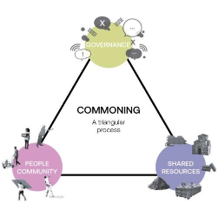
Commoning is the process of working together to manage shared resources, responsibilities, and relationships for the collective good. This practice consists of three elements and their interactions:
- What: the shared resources (commons) themselves
- Who: the people (commoners) who gather around them
- How: the rules and practices that govern them
Commoning practices can help communities to rethink how they relate to local shared resources by moving grassroots action beyond campaigning towards the collective care and stewardship of local assets. But first, we need to recognise that resources and assets alone do not change the world; people do. Our community's greatest wealth lies not only in local shared spaces and land, but also in the knowledge, skills and relationships of local people. Thus, the long-term sustainability of a commons depends on the quality of relationships and the frequency of interactions between neighbours and local groups.
We can think of commons as shared resources, spaces or forms of knowledge that communities collectively use and care for. Commoning refers to the everyday practices that bring these resources to life: creating regular opportunities for people to connect, develop social bonds, collaborate with a shared purpose and care for shared resources together. These collective practices strengthen trust, deepen social connections and help sustain the commons over time.
As the saying goes, “there is no commons without commoning,” and equally, “there is no commoning without commoners.”
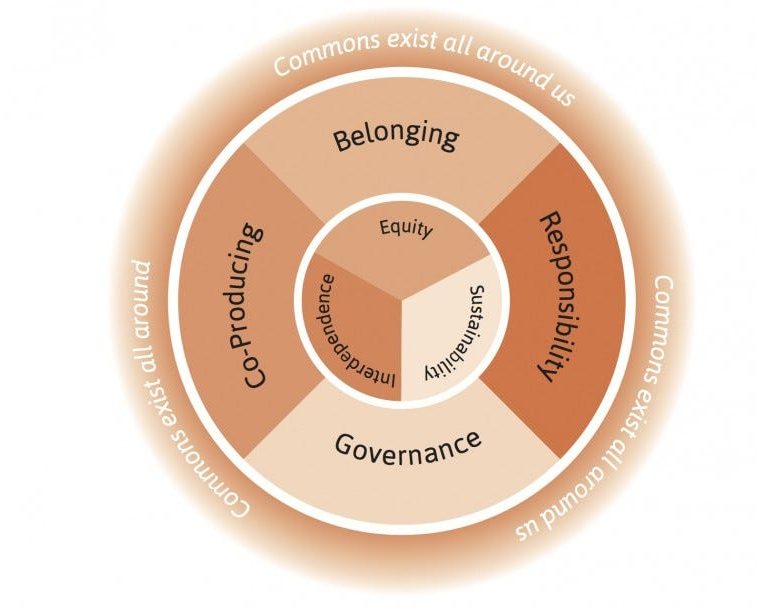
Where are you on the commoning journey?
Commons can be seen as a spectrum, helping to indicate where communities are positioned on their journey towards commoning practices. On one end, it’s just a park or a building we happen to use and on the other, it’s a living movement. Ultimately, space evolves through community participation. That's why commoning is a process of turning a shared resource into 'doing together'- the meetings, the labor, the rituals. It allows communities to gain ownership over the resource they want to care for and define the rules of managing it collectively.
Where would you be on this spectrum?
Start by connecting the work you already do, or want to do, to the practice of Commoning.
Remember: everyone’s will be different.
Commonable forms
Commonable forms are spaces with the potential to be commons eg an active local community or a neighbourhood park with regulars who know each other.
Commons like forms
Commons-like forms have elements of the Commons but they are not managed or produced like a Commons yet. They may be slightly further along the spectrum in that there is some form of organisation taking place but the principles or approach is not recognised as a commons either because this is not a form understood by the group or because they have not explicitly set out to be commons depite adopting its values.
An example might be Queen’s Market in Newham and its community campaign, Friends of Queen’s Market.
Common Stewardship (but not full control)
Common Stewardship represents a group who operate as a commons within themselves as they co-design and co-produce activities in a space or are but they must also deal with an organisation that has ultimate control over that space and sets certain rules of operation unilaterally.
An example would be a local authority owner community centre with fixed opening hours but which is licensed to a group who operate the centre as a commons amongst themselves.
The Commons
The Commons are shared resources co-managed, co-designed and co-produced by its user community; rejecting centralisation of power, decisions, resources and information. An example would be Hasting Commons.
Ideas and practices for communities
Who are the commoners?
There are several ways of identifying how people can take part in developing commons.
One way is to make a list of people that are connected to the shared resource. This could be an overlapping list—it is easier to think in terms of networks or relationships rather than individuals. Try grouping people into categories like neighbours, resident families, visitors, local groups, private businesses and so on.
The Commons can be built through intersecting relationships across areas like food, health, education and social connection or care.
For example, meals in a community kitchen does not just provide nourishment, but it also creates opportunities for health and wellbeing, community and social cohesion, creative and cultural engagement, education and skills training, economic support, and peer advocacy. As mentioned before, people and skills they can share are the critical ingredient.
“People are the critical ingredient. You need a critical mass of people who can identify what it is that they want and work together to secure it. That’s where we have our power.”
- Portia Msimang, Renters Rights London
Community Mapping Techniques
Kumu mapping tool
Clapton Commons
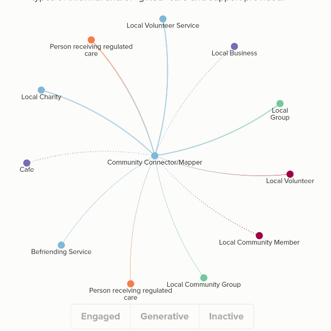
This is a model mapping diagram illustrating the relationships between a local network of neighbours, friends, families, service providers, local businesses and/or initiatives contributing towards care in a co-operative model. This version can also be created using actual names of people and organisations. This was created using Kumu mapping tools.
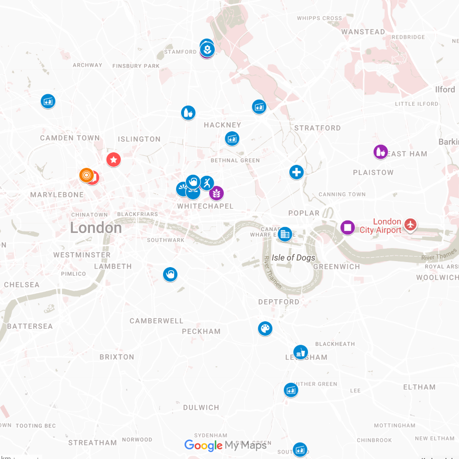
Google Mapping - my maps
Map of the Fairville Partnership
This is a map of Co Produce It's London partners on the Fairville project - it was created in Google My Maps. This is a free Google tool that lets you create a map based on actual locations - anyone with the link to the page can edit and add to the map.
Hand drawn maps - do it your way
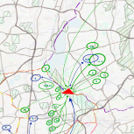
East London Waterworks Park - network map
This is another mapping diagram to illustrate and understand the range and types of commoners available for this space/asset. They colour-coded two types of commoners: those with strong relations to the space (green) and those with neutral or nascent relations to the space (blue). Placing this on a hand drawn map helped them understand how a commoner’s physical proximity to the site affects their relationship to it.
How To Start Commoning
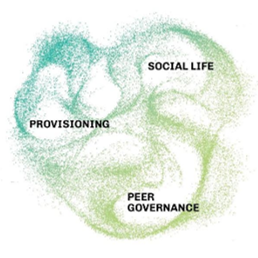
The ‘Triad of Commoning’ offers three interconnected entry points to begin Commoning. These are not fixed processes and they require complex approaches like community organising and animation to move people from being isolated neighbors to becoming a coordinated collective with shared purpose.
Social Life
Building Relationships
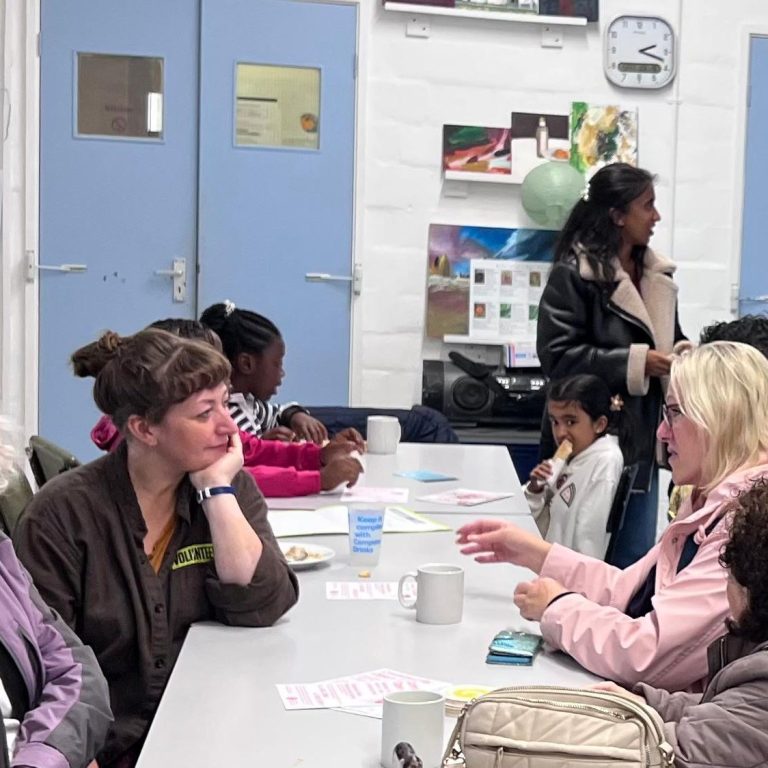
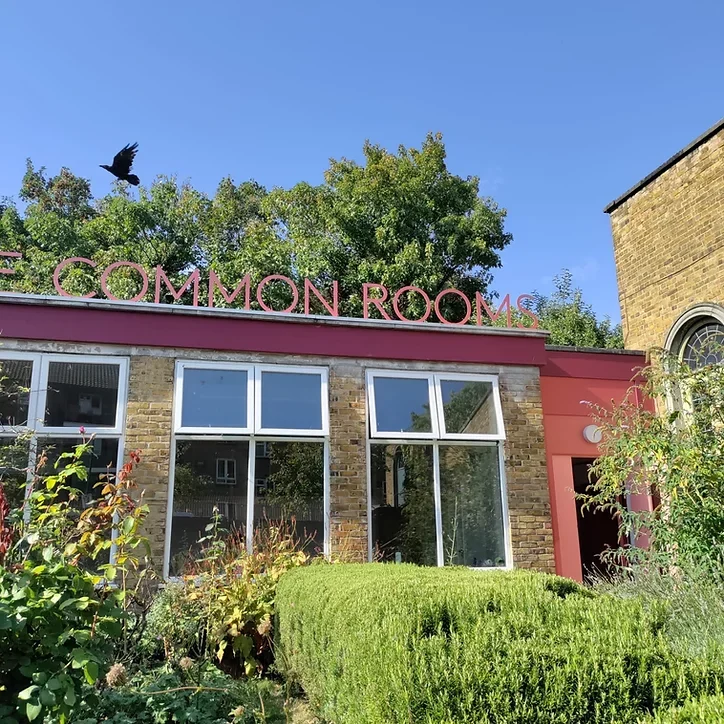
This is the foundation for all Commoning work and the ideal entry point for ‘commonable’ forms. This stage is about building mutual trust, connection and shared responsibility.
Practical actions
- Hosting regular gatherings such as social events, shared meals, or skill-share workshops
- Creating communication channels such as WhatsApp groups, newsletters, or bulletin boards
- Establishing working groups so people can contribute in different ways
- Practicing care and mutual aid by supporting members facing difficulties
Celebrating wins together to build positive associations
Provisioning
Meeting Community Needs & Building Capacity
This stage is about self-organising to create or deliver goods and services that meet community needs—ideal for ‘commons-like’ forms. Over time this lessens dependence on private or state provision and strengthens self-sufficiency.
Practical actions
- Identifying shared needs: what does your community actually want?
- Pooling resources and skills by creating resource-sharing networks such as community gardens
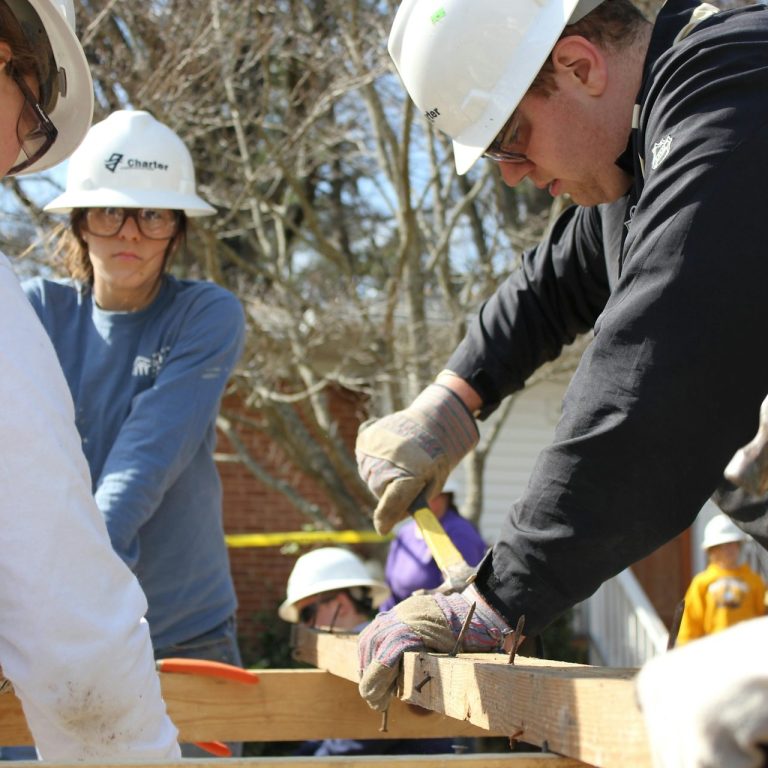
- Organising collective services such as childcare during meetings, tool libraries, or shared transport
- Developing income streams such as community cafés, workshops, or rentals
Practicing a gift economy where people contribute what they can, like their time, skills and resources
Peer Governance
Shared Decision-Making
This stage is about collectively making and adapting the rules that govern your shared space or asset—ideal for existing Commons.
Practical actions
- Encouraging all users of the space or asset to participate in decision-making
- Rotating facilitation of community discussions to prevent power concentration
- Communicating transparently about decisions and finances
- Reflecting frequently and adapting your governance system accordingly
- Ensuring self-monitoring and graduated sanctions for easy conflict resolution
One such example is Sociocracy, which is a peer governance system built around consent-based decision-making and decentralised power. People work in smaller groups or circles with authority over specific areas, making decisions everyone in that group agrees to. Open information-sharing and feedback loops help the circles stay connected and the system to function collectively.